
As promised in a previous post, an in-depth analysis of the title sequence of the movie, Se7en, is in order. The opening sequence for Se7en is quite an interesting one to analyze and is, in my opinion, a staple for the conventions of thrillers and title sequences done right. It is also a vastly different opening from that of “The Pact’ and approaches unnerving the audience and creating tension in a completely different manner.
First and foremost, the title sequence performs is main duty beautifully, leaving the audience with only a bit more information than they entered with, yet giving them enough information to have an idea of what is to come. By utilizing multiple separate shots of hands writing, cutting film and what can be assumed is developing photos in a dark and shadowed setting, the audience is unable to come to a concrete decision on what is occurring, but can assume that some shady and perhaps illegal activity is being conducted in this opening. Also, by only showing the character’s hands and blurry glimpses at their silhouette, the audience is also unsure as to who is completing all the on-screen tasks, working to intrigue and absorb the viewers into the dark world of the film.
This thriller opening also excels at unnerving the audience and setting up the mood and atmosphere to lead the viewers into the main plot and action of their film with a deliberate approach to their mise-en-scene, cinematography, editing, sound, and typography.
Mise-en-Scene
- Lighting – The lighting of the entire piece is low-key, both to impart a dark and dreary mood onto the opening and to obscure the audience’s vision of the setting and props. This obstruction can also be seen as a way to guide the viewers attention and focus them in on what the director wanted them to see. Overall, the lighting adds to the suspicious atmosphere of the opening.

- Costuming/Make-Up – Although the audience does not see any of the character’s body except their hands, the filmmakers ensured that this part of their body would also contribute to the feel of the opening. In the few shots we get of the character’s digits, we see fingernails filled with dirt, peeling, filthy skin, and thin cloth wrapped carelessly around their fingers. This helps increases the audience’s discomfort.
- Props – The props of the opening are the most prevalent: a disheveled book that’s bent out of shape, odd black and white pictures (ex. Picture of the hands with bent joints), a razorblade, a notebook with unintelligible writing, stacks of unorganized papers, a sewing needle – the list goes on. This odd assortment of props that the audience is only allowed a glimpse of adds to the grungy and disheveled feel of the scene and adds to the mystery and intrigue of the viewers.
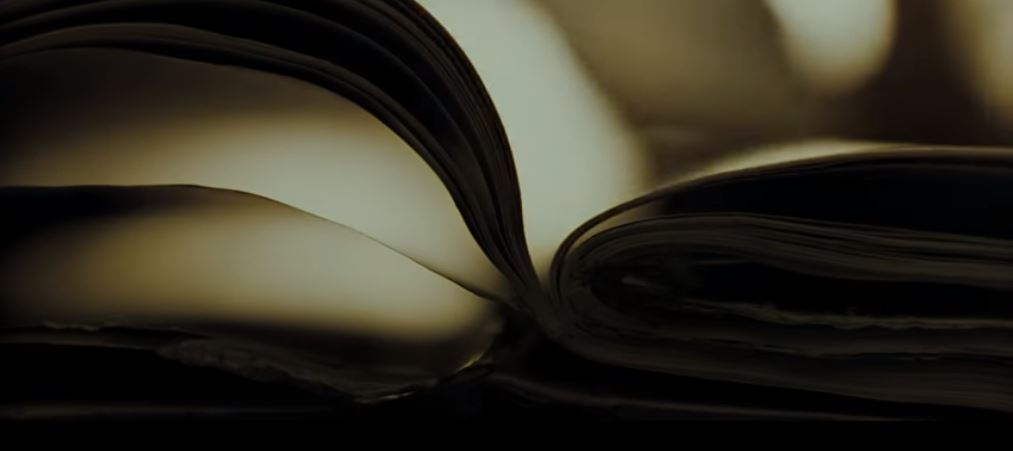
- Blocking – The blocking of the opening is one of the most disturbing and revealing parts of the sequence. The unseen character performs some helpful actions, such as dipping pictures into a solution, which can be assumed to be part of the process of developing pictures. This helps to lead the audience to piece together that the character might be performing some investigative activity. However, the character also performs some questionable and disturbing actions, such as cutting skin off his fingers with a razorblade, which confuses and unnerves the audience further, presenting more questions than the title sequence answers.
Cinematography
- Extreme Close-Up Shots – The entirety of the opening consists of extreme close ups to the different materials and hands of the undisclosed character with the props taking up the majority of the frame in each shot. This simultaneously directs the audience’s attention to the props that are being manipulated to give them clues about what is happening and masks the identity of the manipulator, increasing the overall tension of the title sequence.

Editing
- Jump Cuts – This cut is a rarely used technique in the film industry – a sudden, often jarring, cut from one shot or scene to another without intervening devices (such as fade-outs) (Merriam-Webster). This means one shot will suddenly cut to a shot of the same subject with nothing in between to serve as a transition. In the opening, an example of this is when the single line the character draws over the child’s eyes in the picture turns into multiple lines that cross out the kid’s whole face with no transition to stitch these two actions together. These kinds of shots serve to disorient the audience and, as it is unnatural for things to happen without explanation, it is slightly disturbing.


- Fade – The opening utilizes multiple different kinds of fading transitions, such as a fade in, fade out, fade to black, or even no transition at all, with the clip just jumping to the next scene or title card. This variety works to add a bit of chaos to the opening, disorienting the audience and adding to the tension of the scene.
- Discontinuity Editing – this is an uncommon type of editing, which deliberately uses an arrangement of shots that seem out of place or confusing relative to a traditional narrative (Colgate University). Se7en’s opening is edited in a form that is not chronological and gives little to no sense of chronology that the audience can grasp. This not only further disorients the audience, but it also nods towards the theme of “order vs. disorder” that may come to fruition later in the film.
- Quick Cuts: In the opening, very few shots last more than 1 or 2 seconds, switching rapidly from one action to the next, sometimes containing small, seemingly meaningless blocking that helps add to the audience’s discomfort (ex. The blood dropping onto the papers. This shot lasts for less than a second). This also helps to disorient audiences and increases the possibility of them paying close attention to the opening as they don’t want to miss the shots flashing past them.

- Colors – the colors of the title sequence are also not consistent. While usually retaining a dark, sepia coloring, sometimes the entire frame with be engulfed in a deep, blood red color or switch briefly to black and white, which all work to set up a sense of danger and establish the serious theme and nature of the film.

Sound
- Diegetic Sound – Although this is not a large convention utilized in the opening, certain instances of creaking sounds throughout the opening work to add an extra element to the atmosphere of the title sequence and gives the viewers an idea of the setting of the shady workplace. The audience can now imagine the implied old, creaking floors and run-down state of the current setting.
- Non-Diegetic Sound – This soundtrack of the opening is an essential part, as the music contains deep, pulsating undertones in the music with whiney, high-pitched noises sometimes occurring that grate on the ears of the viewers. The music is not consistent either, with some sounds sometimes seeming to unnaturally overlap and clash, adding to the discomfort of the opening
Typography
- As mentioned in a previous post, the typography of this opening is also a very important aspect of the title sequence. When the credits of the actors and crew show up onscreen, very unconventional font that often curves downward and glitches across the screen is used to present their names. This typography is just as discomforting as the rest of the conventions, working to prevent the audience from experiencing any kind of relief from the tension. Had the filmmakers used a calmer kind of font, such as TIMES NEW ROMAN, the audience may have not taken the opening as seriously or have been a bit less tense as the font is not nearly as unnerving as glitching, slanting font.

Overall, despite mainly accomplishing its means of creating tension through mise-en-scene and editing, the filmmakers made sure to have all its conventions working to further its goal of unnerving and disorienting viewers. This approach to a thriller opening is vastly different to that of “The Pact” and has both broadened my perspective on thriller openings and given me more ideas on how to approach my own title sequence. I will make sure to focus all the new aspects I have learned to my group’s title sequence and instill the desired mood in the viewers.
Sources:
- https://www.imdb.com/title/tt0114369/
- https://www.merriam-webster.com/dictionary/jump%20cut
- https://www.mediacollege.com/video/editing/transition/jump-cut.html
- https://sites.google.com/a/colgate.edu/fmst-terminology/discontinuous-editing
- https://www.slideshare.net/MorganRedman/se7en-film-opening-analysis
 Lucid Elucidation's Explanations